
Bleeding After Tooth Extraction: When Should You Start Worrying
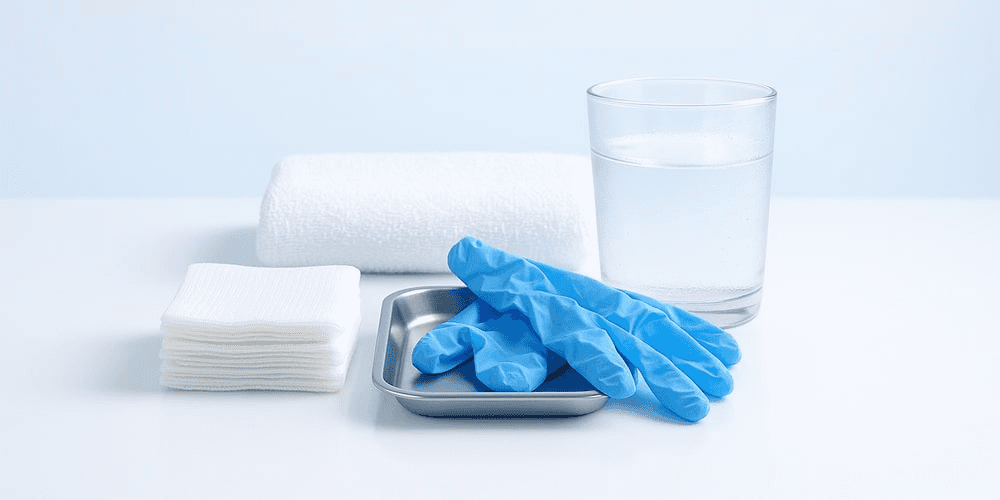
Bleeding after tooth extraction is usually brought under control in a short time once a blood clot forms and stays in place. Avoiding behaviours that can dislodge this clot (vigorous rinsing, frequent spitting, using a straw, hot food/drinks, smoking, alcohol, heavy exercise) helps the area heal faster.
How long does bleeding after tooth extraction last?
In most cases, the bleeding decreases significantly within the first 1–2 hours, and if the clot is protected, it usually stops within about 4–6 hours.
Seeing a pinkish colour in your saliva during the first hours is normal. What really matters is whether fresh, bright-red blood continues to drip from the socket.
How to reduce bleeding
Right after the extraction, bite firmly on the gauze for 30–45 minutes, keeping it stable with constant pressure. Repeat once if necessary.
Do not rinse vigorously, spit frequently, or use a straw during the first 24 hours.
Avoid hot food and drinks, smoking, and alcohol. Rest with your head and upper body slightly elevated.
Postpone activities that increase blood circulation (sauna, very hot showers, heavy exercise) on the first day.
When to contact your dentist urgently
Active, fresh bleeding that continues longer than 6 hours
No clot formation at all or repeated loss of the clot
Bad smell, fever, rapidly increasing swelling or pain that cannot be controlled with prescribed painkillers
Baby tooth extraction: Bleeding and care in children
Children usually heal faster than adults. After a baby tooth extraction, bleeding often stops within 15–30 minutes.
Advice for parents:
Have your child bite on gauze with firm pressure for 15–20 minutes.
Avoid hot foods/drinks and do not allow the use of a straw in the first hours.
Rinsing and frequent spitting can disturb the clot and should be prevented.
Stop your child from touching the wound with their tongue or fingers.
If the bleeding lasts longer than expected or if tiredness, fever, or pain increases, contact your dentist.
Tooth extraction in patients on blood thinners
Blood thinners (anticoagulants such as warfarin/Coumadin; NOACs like rivaroxaban, apixaban, etc.) are critical for cardiovascular health and must never be stopped without medical advice. Before the appointment, all medications and systemic diseases must be reported completely.
Planning and treatment principles:
In patients using warfarin, a current INR value is checked; for simple extractions, an INR below about 3 is often targeted.
For NOAC users, many simple extractions can be performed without stopping the medicine, depending on the procedure type and individual risk; the decision is made jointly by the treating physicians.
After the extraction, firm pressure with gauze is applied for 45–60 minutes. If needed, local haemostatic materials, stitches and tranexamic acid solutions can be used.
For the first 24 hours, avoid hot foods/drinks, smoking, alcohol, heavy exertion and straws.
Warning signs that require emergency attention:
Heavy bleeding lasting longer than 6 hours
Feeling faint, palpitations, marked weakness
Repeated loss of the clot and pain that cannot be controlled
Bleeding After Tooth Extraction Procedure and Follow-up
The patient’s medical history, medications and general health must be thoroughly evaluated before the procedure. During extraction, effective local haemostasis should be ensured using firm pressure, gentle/atraumatic technique, stitches when needed, local haemostatic agents and, in suitable cases, tranexamic acid irrigation.
At the end of the procedure, written aftercare instructions should be given. What to avoid in the first 24 hours (rinsing, using a straw, hot food/drinks, smoking, alcohol, heavy exertion) must be clearly explained.
If bleeding, pain or swelling lasts longer than expected, the patient should be evaluated early via phone, message or photos, and a same-day control appointment should be arranged when necessary.
Content Reviewed by: Dr. Arzu Uluköylü, Dentist Last Updated: November 14, 2025

Questions?
Ask here