
Root Canal Treatment in Turkey: Can It Be Done in One Visit?
Clinical review: Spec. Dt. Esra Uluköylü, Endodontist
Last clinically reviewed: 4 November 2026
If you are travelling to Turkey for dental treatment, finding out that you need a root canal can raise practical questions.
Can the treatment be completed during your trip? Will you need a crown afterwards? What happens if the tooth has already had a root canal? And how much time should you allow before flying home?
The answer depends on the individual tooth. Some root canal treatments can be completed in one appointment, while others need more than one visit. The root canal itself and the final crown are also separate stages of treatment.
This guide explains how root canal treatment works, what affects the timetable and what international patients should ask before travelling to Istanbul.
Can root canal treatment be completed in one visit?
Yes. Some root canal treatments can be completed in a single appointment when the dentist or endodontist determines that it is appropriate.
However, same-day treatment is not suitable for every tooth. The complexity of the canals, the condition of the tooth, the presence of infection and whether the tooth has been treated before can affect the plan.
Completing the root canal in one visit also does not automatically mean that the tooth has finished healing or that a permanent crown can be fitted on the same day.
The most important goal is not to finish as quickly as possible. It is to diagnose the problem, treat the root canal system carefully and restore the tooth appropriately.
What is root canal treatment?
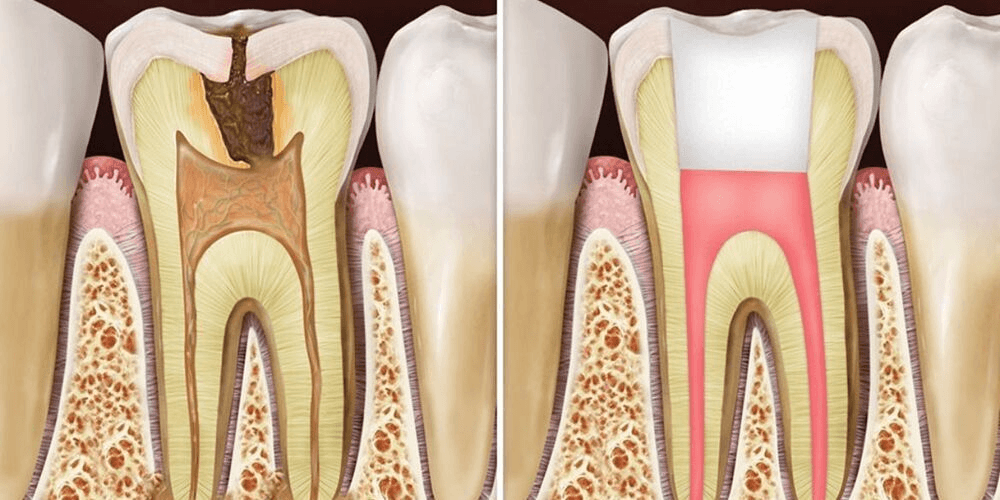
Root canal treatment, also called endodontic treatment, is a procedure used to treat problems affecting the tissue inside a tooth.
Inside each tooth is a soft tissue called the pulp. It contains nerves, blood vessels and connective tissue. Deep decay, a crack, injury or repeated dental work can damage or inflame the pulp. Bacteria can also enter the tooth and cause infection.
During root canal treatment, the dentist removes the affected pulp tissue, cleans and disinfects the root canal system, and fills and seals the canals. The tooth then needs an appropriate restoration, such as a filling or crown, to protect it and restore its function.
The aim is to keep the natural tooth where possible. Whether a tooth can be saved depends on its remaining structure, the condition of its roots, the surrounding bone and gums, and other clinical findings.
You can read more about the procedure on our root canal treatment page.

FineUp Clinic stands out as a premier destination for those in need of swift and reliable oral care.
What are the signs that you may need a root canal?
A tooth that needs root canal treatment may cause:
Toothache that persists or occurs spontaneously
Pain when biting or chewing
Sensitivity to hot or cold that lingers
Swelling around the tooth or gum
A recurring spot or small swelling on the gum
Darkening of a tooth after injury
However, these symptoms do not automatically mean a root canal is needed. Other dental problems can cause similar complaints, and some teeth requiring treatment may cause little or no pain.
A dentist or endodontist needs to examine the tooth and use appropriate tests and imaging before making a diagnosis.
If you have severe or worsening symptoms while planning a trip, do not wait for an overseas appointment without seeking advice. A local dentist can assess the problem and help determine what needs attention first.
Why do some root canals need more than one appointment?
Every tooth has its own anatomy. Some have a relatively straightforward canal system, while others contain narrow, curved, branching or previously treated canals.
More than one appointment may be considered when the endodontist needs additional time to manage the tooth safely and effectively. For example:
Complex root canal anatomy
Back teeth often have more roots and canals than front teeth. Some canals are curved or difficult to locate, and their internal shape may make cleaning more challenging.
An endodontist assesses the anatomy and chooses the instruments and techniques needed for the individual tooth. Finding and treating the canals matters more than meeting a predetermined appointment length.
A tooth that has already had a root canal
If a previously treated tooth has not healed as expected or develops a new problem, it may need root canal retreatment.
Retreatment can involve reopening the tooth, removing the previous filling material, locating and disinfecting the canals again, and assessing the reason for the earlier problem. Depending on the case, this can be more complex than a first root canal.
You can learn more in our guide to a second root canal treatment on the same tooth.
Infection, symptoms or other clinical findings
The condition of the tooth and surrounding tissues may affect whether treatment should be completed at once or staged. The endodontist may also need to assess whether the tooth can be restored reliably before completing the treatment.
This decision is made after examination. An online assessment can help with planning, but it cannot replace the clinical findings.
What happens during a root canal appointment?
Although the details vary, root canal treatment usually follows these stages:
Examination and diagnosis. The dentist reviews your symptoms, examines the tooth and takes appropriate X-rays. Additional imaging may be considered if clinically necessary.
Local anaesthesia. The area is usually numbed before treatment. Tell the clinician if you feel pain during the procedure so they can assess your comfort.
Access to the tooth. An opening is made to reach the pulp chamber and root canals.
Cleaning and disinfection. The affected tissue is removed, and the canals are cleaned, shaped and disinfected.
Filling the canals. Once the clinician determines that the canals are ready, they are filled and sealed.
Restoring the tooth. The opening is sealed with a temporary or permanent restoration. A separate appointment may be needed for a final filling, onlay or crown.
The number of appointments and their duration depend on the tooth and treatment plan. A complex tooth may take longer than expected, and a patient may need other dental work during the same trip.
Is a root canal painful?
Local anaesthesia is normally used to make treatment as comfortable as possible. You may still feel pressure during the procedure, but you should tell your clinician if you feel pain or if the area does not feel sufficiently numb.
After treatment, the tooth and surrounding area can feel tender, especially when biting. This sensitivity is often temporary. Your dentist will explain what to expect and whether any medication is appropriate for you.
A root canal can help address pain caused by an inflamed or infected tooth, but it is not possible to guarantee that every person will feel immediate relief or have exactly the same recovery.
For a closer look at symptoms after treatment, read Is It OK to Feel Pain After Root Canal Treatment?.
Do you always need a crown after a root canal?
No. Not every root-canal-treated tooth automatically needs a crown.
The choice of restoration depends on factors such as:
Whether the tooth is a front or back tooth
How much healthy tooth structure remains
Existing fillings, fractures or cracks
The forces placed on the tooth when biting
The tooth’s position and appearance
Whether the tooth is part of a bridge or larger treatment plan
Back teeth often experience greater chewing forces and may need a crown or another protective restoration. Some teeth can be restored with a filling or another approach if the clinician considers it suitable.
A crown protects and restores the visible part of the tooth. It is not the same procedure as treating the root canals inside the tooth.
Can the root canal and crown be completed in the same trip?
In some cases, yes. A patient may have root canal treatment followed by the preparation and fitting of a crown during one stay in Istanbul.
However, the timing depends on the tooth, symptoms, the treatment required and the work needed to prepare and produce the restoration. A complex root canal, multiple teeth or unexpected findings may change the schedule.
FineUp Clinic has an in-house dental laboratory, which can assist with the planning and production of restorations. Your dentist will explain the proposed timetable after evaluating your case.
A crown may be fitted during the treatment trip, but healing of the tissues around the root can continue after you return home. The timing of follow-up should be discussed with your dentist.
How long should you stay in Turkey for root canal treatment?
There is no single number of days that applies to every patient.
A straightforward root canal may be completed in one appointment, but you should not assume that the entire treatment journey will take only one day. The clinician may need time for examination, imaging, further treatment, a permanent restoration and a review before you travel.
The length of stay can depend on whether you need:
One root canal or treatment on several teeth
A first root canal or retreatment
A filling, onlay or crown afterwards
Other dental work during the same visit
Additional appointments because of the tooth’s condition
At FineUp Clinic, patients who also need crowns or veneers commonly plan a stay of around five to six days, but this is an indicative timetable for restorative work, not a guarantee for a root canal case. Your plan may be shorter or longer.
Before booking flights, ask the clinic for a proposed schedule based on your treatment plan. FineUp is closed on Sundays, and appointments are not planned for the day of arrival or departure. Final scheduling is confirmed with the clinic.
Can you combine root canal treatment with a smile makeover?
Yes, a root canal can sometimes form part of a broader treatment plan that also includes crowns or other restorative work.
For example, a patient considering a smile makeover may have a tooth with deep decay, an old root canal or symptoms that need assessment before a new crown is placed. In that situation, the health of the tooth should be addressed as part of the plan.
Not every tooth receiving a crown needs root canal treatment. The decision should be based on the tooth’s condition and diagnosis, not simply on the choice to have a smile makeover.
At FineUp Clinic, the dentist can discuss how the endodontic and restorative stages fit together. The final plan is confirmed after examination and imaging.
How much does root canal treatment in Turkey cost?
The cost of root canal treatment in Turkey varies according to the tooth and the complexity of the treatment.
A quotation can be affected by:
The number of teeth requiring treatment
Whether the tooth is a front tooth or a molar with multiple canals
Whether it is a first root canal or retreatment
The complexity of the canal anatomy
Existing crowns, posts or previous dental work
The need for additional imaging or procedures
Whether the final filling, onlay or crown is included
A lower advertised price may refer only to the root canal procedure. If the tooth also needs a crown, the restoration and laboratory work may be quoted separately.
Before comparing prices, ask:
“Does this quotation include both the root canal treatment and the final restoration, and what could change after the examination?”
FineUp can provide a preliminary estimate based on the information available. The final quotation and treatment plan are confirmed after clinical assessment.
What is an endodontist, and when might you need one?
An endodontist is a dentist who has completed additional specialist training focused on the diagnosis and treatment of problems involving the dental pulp and root canal system.
Endodontists treat both straightforward and complex cases. A patient may particularly benefit from specialist assessment when a tooth has:
Difficult or curved root canals
A previous root canal that may need retreatment
Persistent or recurring symptoms after treatment
Unusual canal anatomy
A problem that requires assessment for endodontic surgery
Specialist assessment does not mean every tooth can be saved. The condition of the roots, remaining tooth structure and surrounding tissues all matter.
At FineUp Clinic, endodontic cases are assessed by the clinical team according to the patient’s needs. Meet our doctors, including endodontist Spec. Dt. Esra Uluköylü.
Is a microscope required for every root canal?
No. A microscope is not a requirement for every root canal treatment.
Magnification and appropriate lighting can help a clinician examine details inside the tooth. A dental operating microscope can be particularly helpful in selected complex cases, such as locating difficult canals, assessing suspected cracks or managing certain retreatment complications.
The choice of equipment depends on the case. The important point is that the clinician has the training, time and tools needed for the tooth being treated.
Is a 3D scan necessary for root canal treatment?
Not always. Many root canal cases can be assessed using clinical examination and standard dental X-rays.
A three-dimensional scan, also called CBCT, may be considered when the clinician needs more information that cannot be obtained adequately from the examination and conventional images. Examples can include selected complex anatomies or retreatment cases.
The need for imaging is decided individually, taking into account the expected clinical benefit.
What happens if the tooth cannot be saved?
Sometimes a tooth cannot be restored predictably. This may be because of a fracture, insufficient remaining tooth structure, the condition of the surrounding tissues or other clinical findings.
If your dentist considers that a tooth cannot be saved, they should explain why and discuss the alternatives. Depending on your case, those may include extraction and replacement with an implant or another restoration.
The decision should not be made solely from a photograph or a quoted price. It should follow a clinical examination and a discussion of the benefits, limitations and alternatives.
For patients considering replacement options, our guide explains what to check before getting dental implants in Turkey.
What should you do after root canal treatment?
Your clinician will give you instructions suited to your tooth and treatment. General points often include:
Follow the medication instructions provided by your dentist.
Keep brushing and flossing gently around the area.
Avoid biting hard foods with the treated tooth until your dentist says it is adequately restored.
Attend the planned appointment for your final filling, onlay or crown.
Contact the clinic if a temporary filling or restoration comes loose, breaks or falls out.
Arrange the recommended dental reviews after returning home.
A root-canal-treated tooth still needs daily cleaning and professional care. Although the pulp has been treated, the tooth can still develop decay or gum problems.
What if you have pain or swelling after returning home?
Some tenderness after treatment can occur, particularly in the first few days. Contact your treating dentist if pain is severe, gets worse, does not improve as expected, your bite feels uneven, or visible swelling develops.
If you are no longer in Turkey, contact FineUp and arrange an assessment with a local dentist where needed. Keep your treatment summary and X-rays available so the clinicians involved can understand what was done.
Seek urgent medical help if you develop difficulty breathing or swallowing, or rapidly spreading swelling involving the face or neck.
For more information about a previously treated tooth, see Pain and Swelling After Root Canal Retreatment.
What information should you receive before travelling?
If you are considering a root canal in Turkey, ask the clinic to explain:
Which tooth or teeth may require treatment, and what has been seen on the available X-rays.
Whether the proposed procedure is a first root canal or retreatment.
Whether a crown or other final restoration is likely to be needed.
How many appointments are expected and how much time to allow in Istanbul.
What is included in the estimate and what might change after examination.
Who will carry out the treatment.
What follow-up and treatment records will be provided.
An online review is useful for discussing possibilities, but it should not be treated as a definitive diagnosis. Your final treatment plan should follow an in-person examination.
Root canal treatment at FineUp Clinic
FineUp Clinic provides preliminary treatment planning for patients travelling to Istanbul. Where available, photographs, X-rays and details of your symptoms can help the clinical team understand your concerns before your visit.
Once you arrive, the dentist examines the tooth and confirms the diagnosis and recommended treatment. If root canal treatment is appropriate, the clinician will explain whether it is likely to be completed in one appointment or whether additional visits may be needed.
When a crown or another restoration is required, the endodontic and restorative stages can be planned together. FineUp’s in-house laboratory supports the restorative part of treatment.
The aim is not to promise every patient a same-day root canal. It is to make a plan that suits the tooth, your wider dental health and the time you can safely allow for treatment.
Frequently asked questions
Can I have a root canal in one day in Turkey?
Yes, some root canal treatments can be completed in one appointment. Whether this is appropriate depends on the diagnosis, the anatomy of the tooth and the clinician’s assessment.
Does a same-day root canal include a crown?
Not necessarily. The root canal and the final crown are separate stages and may be charged or scheduled separately. Ask the clinic exactly what is included in your plan.
How long does root canal treatment take?
The appointment length varies. The number of canals, their shape, previous treatment and the condition of the tooth all affect the time needed. Some cases require more than one appointment.
Can I get a root canal and a crown during one trip to Istanbul?
This is possible for some patients, but the schedule depends on the clinical situation and the restoration. Ask for a proposed timetable before booking travel and confirm it after examination.
Can a root canal be redone?
Yes. Root canal retreatment may be possible if a previously treated tooth develops a problem or does not heal as expected. Whether retreatment is suitable depends on the cause of the problem and whether the tooth can be restored.
Is root canal treatment cheaper in Turkey than in the UK?
Prices vary between clinics and cases. When comparing quotations, check whether each price includes examination, imaging, the root canal itself and the final restoration. Travel and accommodation should also be considered.
Can I fly after a root canal?
Many patients can travel after treatment, but the right timing depends on their symptoms, the procedure and whether further appointments are needed. Ask your treating dentist before booking your return flight, and seek advice if you have significant pain or swelling.
Will I receive my X-rays and treatment records?
Ask your clinic for relevant records, including a treatment summary and available X-ray images, before you travel home. These can help your local dentist understand your treatment and provide follow-up care.
Should I wait until I arrive in Turkey if I have swelling?
Do not delay assessment of significant or worsening swelling simply because you have a future trip booked. Contact a local dentist promptly. If you have difficulty breathing or swallowing, or rapidly spreading face or neck swelling, seek urgent medical help.
This article is for general information and does not replace a dental examination, individual diagnosis or treatment plan.

Questions?
Ask here