
Can People with Dental Implants Have an MRI?
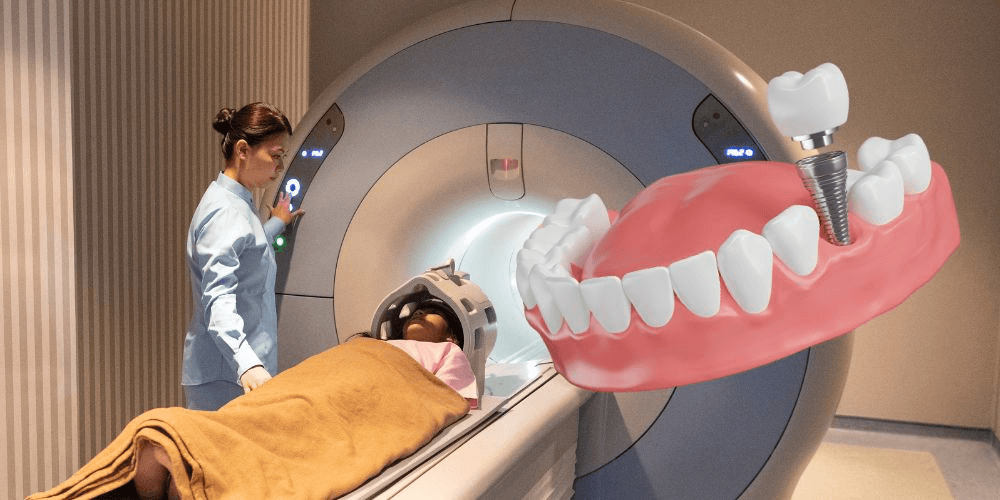
Are Dental Implants a Barrier to MRI?
One of the most common concerns among patients with dental implants is whether it is safe to undergo an MRI scan. In general, dental implants are not a barrier to MRI. This is because most modern implants are made of titanium, a material that is not ferromagnetic and remains safe even in strong magnetic fields. Similarly, zirconia implants are also fully compatible with MRI scanners.
In some cases, however, restorations placed on top of the implants—such as metal-based crowns, fixed bridges, or prosthetic teeth—may affect the image quality. These restorations can occasionally cause artifacts (distortions in the image). For this reason, it is important to inform your doctor or MRI technician about your implants and restorations before the scan.
How Does an MRI Scanner Work?
Magnetic Resonance Imaging (MRI) uses powerful magnets and radio waves to create detailed images of the body’s internal structures. Unlike X-rays or CT scans, MRI does not use radiation.
It is a painless and non-invasive procedure.
The patient must remain still during the scan to obtain clear results.
Due to the loud noise of the machine, earplugs or headphones are usually provided.
The main concern lies in how metallic materials inside the body react to the magnetic field.
Dental Treatments That May Pose Risks During MRI
Although modern implants are safe, some older dental treatments or materials may cause problems during MRI scans. Ferromagnetic materials, in particular, can interfere with both image quality and patient safety.
Dental Restorations That May Affect MRI Safety:
Metal-supported fixed prostheses
Orthodontic braces and wires
Metal crowns
Partial cast dentures
Dentures with magnets
Amalgam fillings
Older-generation implants
For example, amalgam fillings can heat up under certain conditions in modern MRI machines, potentially releasing small amounts of mercury. This is rare, but it highlights the importance of knowing exactly which materials are present in the mouth.
Magnetic Properties of Dental Materials
The effect of MRI on dental work depends on the type of metal used:
Ferromagnetic materials (e.g., iron, nickel): strongly attracted by the magnetic field.
Paramagnetic materials (e.g., titanium, aluminum, tantalum): show weak magnetism, minimal effect on MRI.
Diamagnetic materials (e.g., gold, silver, copper): repelled by the magnetic field and generally MRI-compatible.
This is why modern implants made of titanium or zirconia are considered safe.
What to Do Before Having an MRI with Dental Implants
To ensure both safety and image quality, you should:
Ask your dentist about the exact materials used in your implants and restorations.
Share this information with your radiologist before the scan.
If you have older implants, make sure the material content is clarified.
If in doubt, contact the clinic that placed the implant for confirmation.
Are Dental Implants a Problem for MRI?
In most cases, modern dental implants (titanium and zirconia) do not prevent MRI scans. Patients with these implants can safely undergo MRI.
However, restorations placed on top of implants or treatments involving older materials may affect image quality or create minor risks. This is why it is always essential to inform your doctor and MRI technician about any dental work before the procedure.
Content Reviewed by: Dr. Arzu Uluköylü, Dentist Last Updated: August 18, 2025

Questions?
Ask here